Publications

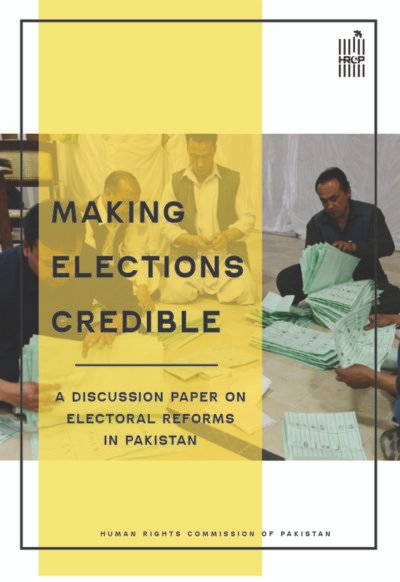
Making Elections Credible

Elections in Pakistan are a contested subject, with the losing side invariably questioning the election’s outcome. The role of undemocratic forces in manipulating the election results has now been established beyond a doubt, putting the integrity of the whole exercise under question. Since elections play a vital role in the strengthening of democracy by letting the people express their will through their votes, this lack of credibility has had serious conse- quences for the country’s political stability. It would not be incorrect to say that unelected forces in Pakistan consider the electoral sys- tem as a mere tool to fulfill the claims of procedural democracy, which effectively does little to change the balance of power in favour of elected people. The Human Rights Commission of Pakistan (HRCP) has remained committed

This is the heading

  • Keyword

  • Year

  • Region

  • Categories

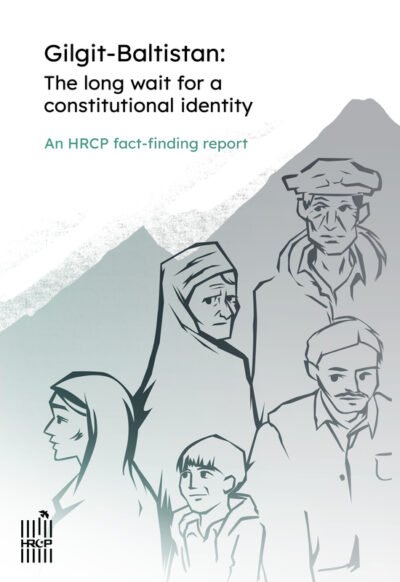
Gilgit-Baltistan: The long wait for a constitutional identity

Gilgit-Baltistan (GB), which remains a de facto administrative unit of Pakistan—its citizens deprived of the right to political representation at the level of Parliament—has long been an area of concern for the Human Rights Commission of Pakistan (HRCP). The organisation continues to advocate that GB’s people should enjoy the same fundamental rights as all citizens and residents of Pakistan. Accordingly, HRCP carries out high-profile fact-finding missions to GB periodically to assess the state of human rights in the area and recommend to policymakers measures that would alleviate the grievances documented during these missions. To this end, HRCP led a mission to GB during 4–9 June 2022, comprising HRCP Council members Salima Hashmi and Muzaffar Hussain, senior journalist Ghazi Salahuddin, and staff members Israruddin Israr (Gilgit), Zaheera Siraj (Gilgit), and Nadeem Abbas (Islamabad). The aims of the mission were to: – Assess the implications of the political status of GB for the local population. – Determine the extent and impact of curbs on freedom of movement, expression, association, and assembly in the area. – Establish facts concerning the misuse of anti-terrorism laws—especially under Schedule IV of the Anti-Terrorism Act 1997—against human rights defenders and political activists. – Assess people’s access to

Read Here »

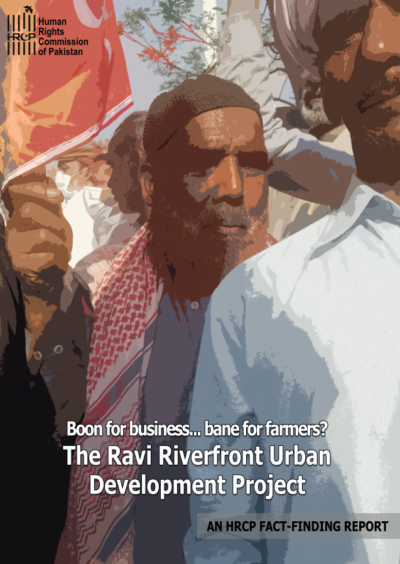
The Ravi Riverfront Urban Development Project

Since late 2020, the Human Rights Commission of Pakistan (HRCP) has been alarmed by the launch of the mammoth Ravi Riverfront Urban Development Project (RUDP) by the Punjab government under the direct supervision of the prime minister. The project has been plagued by myriad controversies since the outset—from the expected damage to the environment to the very real loss of livelihoods for small landowners. Moreover, the involvement of private real estate developers in the reportedly multi-trillion-rupee venture makes the entire exercise even more suspect vis-à-vis official claims that the exercise is for the ‘benefit of the masses.’ Farmers, whose lands the government has begun to take over, are up in arms against forcible evictions and various state pressure tactics, while activists continue to voice their concerns about the project’s environmental cost. With numerous civil society organisations and rights activists stirring into action, HRCP constituted a fact-finding mission to scrutinise the various impacts of the project, most notably violations of human rights, and to present possible mitigation measures to assist landowners as well as other civil society partners. In this regard, a consultation was organised on 26 January 2021, mostly with subject experts, urban planners, environmentalists, lawyers and HRCP members, including

Read Here »

HRCP launches fact-finding report on rights violations in Balochistan’s coal mines

Quetta, 24 November 2022. In its fact-finding report titled Beneath the surface: Rights violations in Balochistan’s coal mines, launched in Quetta earlier today, the Human Rights Commission of Pakistan (HRCP) has underscored the alarming frequency of mining-related deaths and injuries in the region. Based on field visits and consultations with coalminers, labour unions and government departments, the report recommends that the number of trained government safety inspectors and the frequency of their inspections be increased to maintain safety standards and reduce the number of mining accidents. Mine owners and contractors must also ensure a functioning ambulance service with onsite emergency health workers and regular internal safety inspections at every mining site. Mining tunnels must be constructed in accordance with the law, and kept well ventilated to allow both the entry of clean air and to avoid methane build-ups. It is imperative that the federal government ratify ILO Convention C-176 so that such minimum standards of occupational safety and health are determined and implemented. Coal miners must further be registered and made eligible for EOBI social security and Workers’ Welfare Fund benefits. The disparity in the treatment of migrant mine workers must be addressed as well by registering them so that they

Read Here »

Civil unrest and violence in Azad Jammu and Kashmir

Introduction Azad Jammu and Kashmir (AJK) has been grappling with significant economic difficulties, including high inflation, elevated utility costs, and frequent power outages for some time. A civil society-based group called the Jammu Kashmir Joint Awami Action Committee (JAAC) has spearheaded protests rooted in these economic grievances, demanding greater autonomy over local resources. Large-scale protests have erupted periodically since March 2023, with Kashmiris taking to the streets to demand subsidized electricity and flour. Led by JAAC, these protests also called for the elimination of unnecessary perks and privileges enjoyed by politicians and bureaucrats. This movement gained significant momentum in May 2024. On 11 May 2024, thousands of ordinary people responded to JAAC’s call and started marching towards the capital city, Muzaffarabad, demanding accountability for the elite and subsidies for electricity and flour. Despite law enforcement agencies’ heavy-handed response, the protesters remained resolute. The demonstrations were unprecedented because they were leaderless, not driven by a political agenda nor led by a political party. The entire region came to a standstill as violent clashes and casualties were reported, first on social media and subsequently by the mainstream media. Shortly following the first verified reports of violence, the Human Rights Commission of Pakistan

Read Here »

Alleged Rape at Private College in Lahore

Case background and timeline 13 October 2024. The DIG Operations in Lahore issued a statement saying that the Punjab police had arrested a security guard employed at a private college in the city; he had been accused of allegedly raping a student. Several media outlets reported this statement and added that the police had taken this action following news reports on social media. The police were still reportedly searching for the victim. 13 October 2024. A news report from ARY News claimed that a female student at Punjab College Campus 10 had allegedly been raped. The report said that she had been accidentally locked in the basement during the break period [when the incident occurred] and a male teacher had approached the scene on hearing her cries. The guard, identified as Aun, claimed ARY News, had fled the scene, while the victim was in intensive care.1

Read Here »

Politics Over People: The Involuntary Repatriation of Afghan Refugees

The Involuntary Repatriation of Afghan Refugees Introduction Pakistan hosts an estimated 3 million refugees, of which about half are believed to lack legal identity, residence or travel documents. In late September 2023, Pakistan’s caretaker government drew up the Illegal Foreigners’ Repatriation Plan (IFRP).1 The plan was approved at a high-level meeting chaired by the caretaker prime minister and attended by top civil and military officials on 3 October 2023; a notification to this effect was released the same day. Under the plan, all ‘illegal’ or unregistered foreign nationals would be repatriated to their home countries, including those who were in Pakistan on expired travel visas. District administrations, police authorities, public prosecution personnel and jail administrations were authorized to arrest, detain (in jails or other suitable premises) and deport all ‘illegal’ foreigners.2 The deportations were to begin from 1 November 2023. The government’s decision was publicly announced at a press conference by the caretaker interior minister.3 He did not quote any specific numbers of ‘illegal’ foreigners but did mention the estimated number of ‘illegal’ Afghans in the country, putting the f igure at over 1.7 million. This specific identification indicated that the decision targeted Afghan refugees. Pakistan does not have domestic

Read Here »