Publications

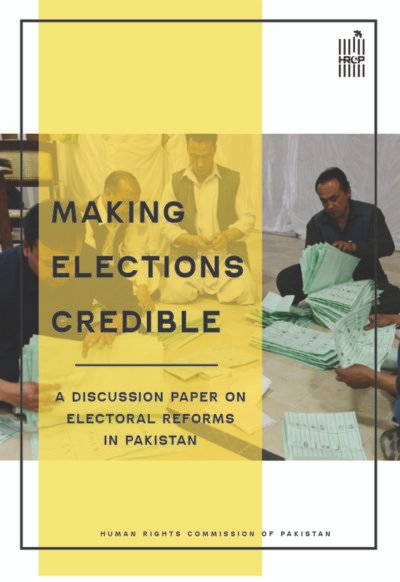
Making Elections Credible

Elections in Pakistan are a contested subject, with the losing side invariably questioning the election’s outcome. The role of undemocratic forces in manipulating the election results has now been established beyond a doubt, putting the integrity of the whole exercise under question. Since elections play a vital role in the strengthening of democracy by letting the people express their will through their votes, this lack of credibility has had serious conse- quences for the country’s political stability. It would not be incorrect to say that unelected forces in Pakistan consider the electoral sys- tem as a mere tool to fulfill the claims of procedural democracy, which effectively does little to change the balance of power in favour of elected people. The Human Rights Commission of Pakistan (HRCP) has remained committed

This is the heading

  • Keyword

  • Year

  • Region

  • Categories

Allegations of blasphemy and mob violence in Mujahid Colony, Sargodha

On 25 May 2024, a large mob gathered in Mujahid Colony in Sargodha and attacked the house of Nazir (Lazar) Masih and his son Sultan Masih, following allegations that they had deliberately burnt pages of the Holy Quran. An announcement to this effect was reportedly made from a local mosque, inciting a mob of about 2,000 people to gather outside the adjoining homes of Nazir and Sultan Masih, demanding they be put to death. Videos of the mob and their demand went viral on social media platforms soon after. The police were able to eventually evacuate nine members of the family. However, Nazir Masih was caught by the mob and severely beaten. He was taken to the hospital in critical condition and succumbed to his injuries a week later on the night between 2 and 3 June 2024. On 28 May 2024, a fact-finding mission led by the Human Rights Commission of Pakistan (HRCP) visited Sargodha. The mission comprised Maheen Pracha (staff member), Asad Jamal (lawyer and human rights activist) and Yaqoob Khan Bangash (academic and human rights activist). They met local religious, community and political leaders from the Christian community, senior police officers, members of the victim’s family, and

Read Here »

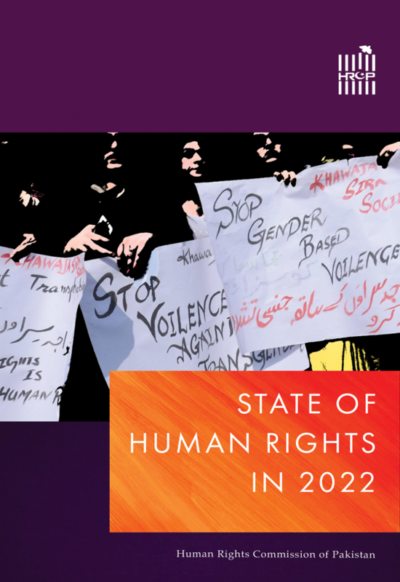
State of Human Rights in 2022

It would not be incorrect to say that things came to a head in many ways for Pakistan in 2022. The year began with a sense of control and preparedness about the Covid-19 pandemic, even though there were hundreds of thousands of new cases across the country. Unfortunately, the political and economic scenario was not as optimistic. As the governments tried to negotiate kinder deals with international lenders, the economy took a nosedive. Inflationary pressure made ordinary people’s lives more difficult; businesses were stalled, leading to unemployment and poverty. It was a year of political unrest and instability, exposing the fragile moorings of our democratic system like never before. The legislature and executive struggled with a crisis of credibility, and the judicial overreach, instead of solving the ensuing constitutional and political crises, only made matters worse. Draconian colonial-era laws continued to be used, as generously as before, against political opponents throughout the year. Moreover, people’s rights to privacy and dignity were violated in the form of audio and video leaks, with no one taking the necessary steps to fix responsibility for undertaking this illegal invasion of privacy and seeking accountability from those found responsible for such acts. Resurgence of terrorism

Read Here »

Civil unrest and violence in Azad Jammu and Kashmir

Introduction Azad Jammu and Kashmir (AJK) has been grappling with significant economic difficulties, including high inflation, elevated utility costs, and frequent power outages for some time. A civil society-based group called the Jammu Kashmir Joint Awami Action Committee (JAAC) has spearheaded protests rooted in these economic grievances, demanding greater autonomy over local resources. Large-scale protests have erupted periodically since March 2023, with Kashmiris taking to the streets to demand subsidized electricity and flour. Led by JAAC, these protests also called for the elimination of unnecessary perks and privileges enjoyed by politicians and bureaucrats. This movement gained significant momentum in May 2024. On 11 May 2024, thousands of ordinary people responded to JAAC’s call and started marching towards the capital city, Muzaffarabad, demanding accountability for the elite and subsidies for electricity and flour. Despite law enforcement agencies’ heavy-handed response, the protesters remained resolute. The demonstrations were unprecedented because they were leaderless, not driven by a political agenda nor led by a political party. The entire region came to a standstill as violent clashes and casualties were reported, first on social media and subsequently by the mainstream media. Shortly following the first verified reports of violence, the Human Rights Commission of Pakistan

Read Here »

Alleged Rape at Private College in Lahore

Case background and timeline 13 October 2024. The DIG Operations in Lahore issued a statement saying that the Punjab police had arrested a security guard employed at a private college in the city; he had been accused of allegedly raping a student. Several media outlets reported this statement and added that the police had taken this action following news reports on social media. The police were still reportedly searching for the victim. 13 October 2024. A news report from ARY News claimed that a female student at Punjab College Campus 10 had allegedly been raped. The report said that she had been accidentally locked in the basement during the break period [when the incident occurred] and a male teacher had approached the scene on hearing her cries. The guard, identified as Aun, claimed ARY News, had fled the scene, while the victim was in intensive care.1

Read Here »

Politics Over People: The Involuntary Repatriation of Afghan Refugees

The Involuntary Repatriation of Afghan Refugees Introduction Pakistan hosts an estimated 3 million refugees, of which about half are believed to lack legal identity, residence or travel documents. In late September 2023, Pakistan’s caretaker government drew up the Illegal Foreigners’ Repatriation Plan (IFRP).1 The plan was approved at a high-level meeting chaired by the caretaker prime minister and attended by top civil and military officials on 3 October 2023; a notification to this effect was released the same day. Under the plan, all ‘illegal’ or unregistered foreign nationals would be repatriated to their home countries, including those who were in Pakistan on expired travel visas. District administrations, police authorities, public prosecution personnel and jail administrations were authorized to arrest, detain (in jails or other suitable premises) and deport all ‘illegal’ foreigners.2 The deportations were to begin from 1 November 2023. The government’s decision was publicly announced at a press conference by the caretaker interior minister.3 He did not quote any specific numbers of ‘illegal’ foreigners but did mention the estimated number of ‘illegal’ Afghans in the country, putting the f igure at over 1.7 million. This specific identification indicated that the decision targeted Afghan refugees. Pakistan does not have domestic

Read Here »