Publications

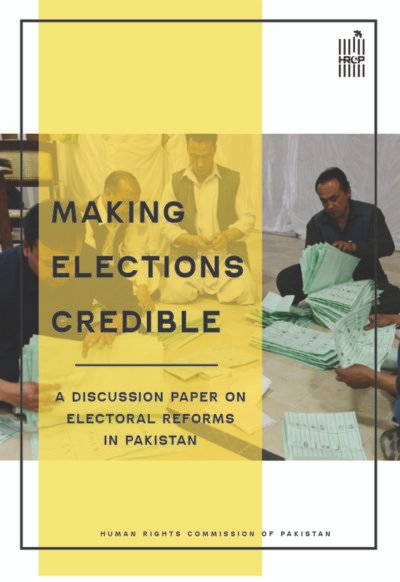
Making Elections Credible

Elections in Pakistan are a contested subject, with the losing side invariably questioning the election’s outcome. The role of undemocratic forces in manipulating the election results has now been established beyond a doubt, putting the integrity of the whole exercise under question. Since elections play a vital role in the strengthening of democracy by letting the people express their will through their votes, this lack of credibility has had serious conse- quences for the country’s political stability. It would not be incorrect to say that unelected forces in Pakistan consider the electoral sys- tem as a mere tool to fulfill the claims of procedural democracy, which effectively does little to change the balance of power in favour of elected people. The Human Rights Commission of Pakistan (HRCP) has remained committed

This is the heading

  • Keyword

  • Year

  • Region

  • Categories

Open letter calling for the protection of Afghan refugees in Pakistan

His Excellency Filippo GrandiUnited Nations High Commissioner for Refugees 31 October 2023 Excellency, Re: Open letter calling for the protection of Afghan refugees in Pakistan The Human Rights Commission of Pakistan (HRCP) is greatly concerned by the Pakistan government’s decision to expel all undocumented foreigners by 1 November 2023, the bulk of whom comprise Afghan nationals. HRCP strongly believes that this decision—which will apply to an estimated 1.7 million Afghans—could trigger a humanitarian crisis. The decision amounts to forced repatriation, which is not recognised under international customary law, and will invariably affect vulnerable refugees and asylum seekers, which include women, children, the elderly, persons living with disabilities, persons from low-income groups, and Afghans at risk because of their professions—many of whom fled Afghanistan after the Afghan Taliban took over the government in August 2021. Despite drawing criticism from human rights organisations and networks, the government has shown no signs of reconsidering this decision, having gone so far as to prevent prominent members of civil society from expressing their views on this matter at public events. The interior minister Sarfraz Bugti has also made it clear that this phase will be followed by the deportation of foreigners with legitimate documents, including

Read Here »

Allegations of blasphemy and mob violence in Mujahid Colony, Sargodha

On 25 May 2024, a large mob gathered in Mujahid Colony in Sargodha and attacked the house of Nazir (Lazar) Masih and his son Sultan Masih, following allegations that they had deliberately burnt pages of the Holy Quran. An announcement to this effect was reportedly made from a local mosque, inciting a mob of about 2,000 people to gather outside the adjoining homes of Nazir and Sultan Masih, demanding they be put to death. Videos of the mob and their demand went viral on social media platforms soon after. The police were able to eventually evacuate nine members of the family. However, Nazir Masih was caught by the mob and severely beaten. He was taken to the hospital in critical condition and succumbed to his injuries a week later on the night between 2 and 3 June 2024. On 28 May 2024, a fact-finding mission led by the Human Rights Commission of Pakistan (HRCP) visited Sargodha. The mission comprised Maheen Pracha (staff member), Asad Jamal (lawyer and human rights activist) and Yaqoob Khan Bangash (academic and human rights activist). They met local religious, community and political leaders from the Christian community, senior police officers, members of the victim’s family, and

Read Here »

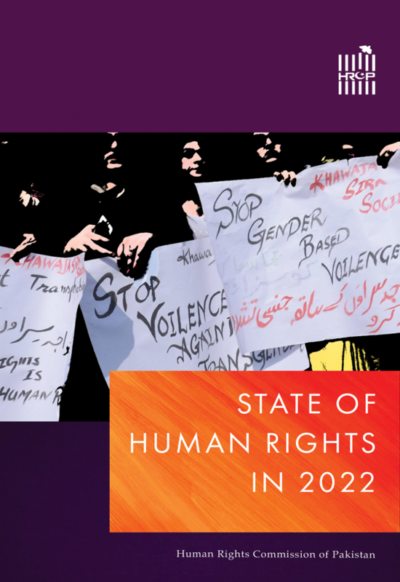
State of Human Rights in 2022

It would not be incorrect to say that things came to a head in many ways for Pakistan in 2022. The year began with a sense of control and preparedness about the Covid-19 pandemic, even though there were hundreds of thousands of new cases across the country. Unfortunately, the political and economic scenario was not as optimistic. As the governments tried to negotiate kinder deals with international lenders, the economy took a nosedive. Inflationary pressure made ordinary people’s lives more difficult; businesses were stalled, leading to unemployment and poverty. It was a year of political unrest and instability, exposing the fragile moorings of our democratic system like never before. The legislature and executive struggled with a crisis of credibility, and the judicial overreach, instead of solving the ensuing constitutional and political crises, only made matters worse. Draconian colonial-era laws continued to be used, as generously as before, against political opponents throughout the year. Moreover, people’s rights to privacy and dignity were violated in the form of audio and video leaks, with no one taking the necessary steps to fix responsibility for undertaking this illegal invasion of privacy and seeking accountability from those found responsible for such acts. Resurgence of terrorism

Read Here »