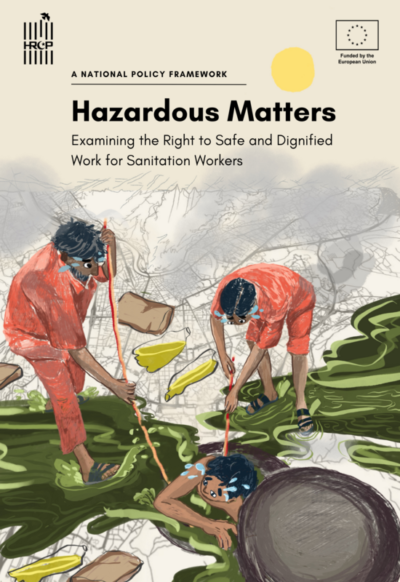
Examining the Right to Safe and Dignified Work for Sanitation Workers
Sanitation workers perform essential public services. They sweep roads, streets and other public areas, remove waste and clean gutters and sewers. Without their services, public streets and roads would be impossible to use and the country’s sewerage systems would break down. Clean streets, gutters and drains are also essential to preventing the spread of contagious diseases. Despite the crucial nature of their work, sanitation workers are among the most marginalized and are often invisible in discussions and scholarship around Pakistan’s workforce. They work in hazardous conditions, clearing toxic and noxious substances, almost always without any protective equipment whatsoever.
In addition, sanitation workers are often paid below the officially prescribed minimum wage1 and lack job security and other benefits. An overwhelming majority of sanitation workers belong to religious minorities that have historically been part of ‘the lowest of the low’ communal matrix and face social stigma and systemic discrimination due to the nature of their work and their caste-based social background.