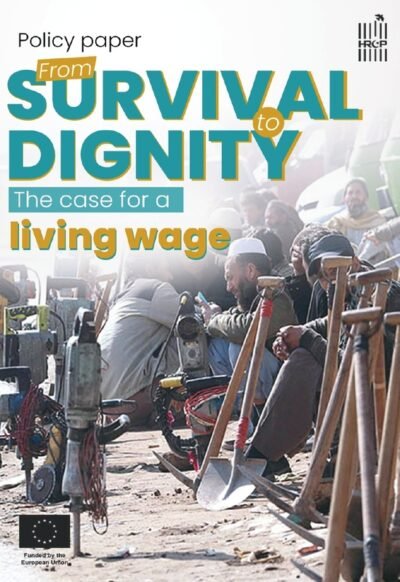
The idea of a living wage is to enable workers and their families to afford a basic yet decent lifestyle, stay above the poverty level, and actively participate in society’s social and cultural life in line with its current economic development (see Anker, 2011). The concept raises many ethical and philosophical questions, including issues of human rights and the right to a decent living.
From a human rights perspective, a living wage becomes a fundamental right to ensure that workers not only meet their basic needs but are also able to live a life of dignity. The Universal Declaration of Human Rights provides the basis for a living wage for every worker in Article 23:
- Everyone has the right to work, to free choice of employment, to just and favourable conditions of work and to protection against unemployment.
- Everyone, without any discrimination, has the right to equal pay for equal work.
- Everyone who works has the right to just and favourable remuneration ensuring for himself and his family an existence worthy of human dignity, and supplemented, if necessary, by other means of social protection.
- Everyone has the right to form and to join trade unions for the protection of his interests.
The implementation of a living wage can be justified on many grounds. Most importantly, it allows us to address several Sustainable Development Goals (SDGs) set by the UN. For instance, implementing a living wage will directly contribute to the first two goals—no poverty and zero hunger (SDGs 1 and 2)—and the advancement of decent work (SDG 8). Further, the UN Global Compact, a corporate sustainability initiative in which more than 100 companies from Pakistan participate, ‘encourages companies to promote and provide a living wage as an essential aspect of decent work.’ A living wage is also about the dignity of individuals and their families while outlining employers’ responsibilities to their employees (Werner & Lim, 2016).
Years of neoliberal policies and reforms have made it difficult for governments to pursue policies that favour job creation1. Free market reforms in trade and finance have adversely affected domestic industry and agriculture in developing countries. Moreover, people’s purchasing power in Pakistan has decreased significantly because of high inflation and slow economic growth. This, coupled with a high population growth rate and vulnerability to climate change, has left the successive governments in Pakistan ill-prepared to provide jobs to a growing number of young people.
According to the UNDP’s human development index (HDI), Pakistan’s HDI value is 0.540, which makes it a country with a low human development classification. With an HDI rank of 164 out of 193 countries, Pakistan is only better than Afghanistan and Nepal in the region. Both Afghanistan and Nepal saw years of violence, which is not the case for Pakistan. As mentioned earlier, almost 40 percent of the Pakistani population lives below the poverty line. A government policy that closes the minimum and living wage gap will ensure that the poor can pull themselves out of poverty.