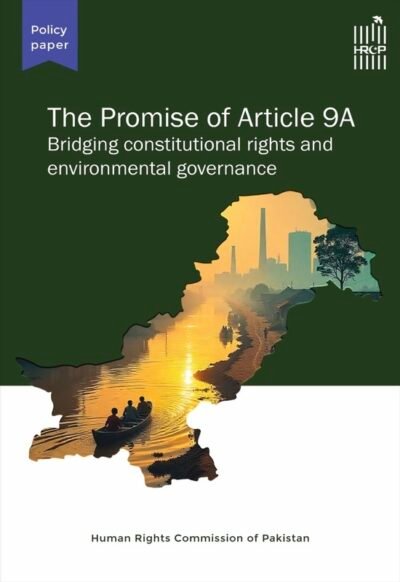
The 26th Constitutional Amendment to the Constitution of Pakistan has been marred by controversy from its inception. Human rights organizations and bar associations alike have raised significant and critical issues on the mode and manner in which the amendment was passed, and its implications on the independence of the judiciary. In the noise surrounding the legitimate concerns of stakeholders, a key addition to the Fundamental Rights guaranteed under the Constitution has been largely ignored in popular discourse. This addition was made with the introduction of Article 9A to the Constitution, which states: ‘Every person shall be entitled to a clean, healthy and sustainable environment’.
Pakistan is one of the most vulnerable countries to the impacts of climate change. This is because of various factors, including its geographical location, reliance on climate-sensitive sectors, socioeconomic conditions, and general lack of mitigation and adaptation measures required to tackle the impending climate disasters. Flash floods have become common, caused by glacial lake outburst floods in the mountainous north, riverine floods, and urban flooding. Storm surges and cyclones periodically pose risks of coastal flooding as well. Yet, Pakistan also consistently faces short-term and prolonged droughts in its arid and semi-arid regions, making it one of the most water-stressed countries in the world. Rising global temperatures have made heat waves a periodic occurrence. At the same time, air pollution in major urban centres has placed Lahore, Peshawar, Faisalabad, and Karachi at the top of the world’s most polluted cities. Amid the many obvious environmental hazards and climate catastrophes, issues surrounding land degradation and the loss of biodiversity have often gone unnoticed.
Resultantly, the UN Habitat Pakistan Country Report 2023 places Pakistan as the fifth most vulnerable country to climate change. Germanwatch Climate Risk Index placed Pakistan at the top spot as the most vulnerable country to climate change globally, on account of the catastrophic floods of 2022. Using available sources, including Germanwatch’s Climate Risk Index (CRI), Pakistan has occupied varying ranks over time. In the CRI covering 2000–19, Pakistan was consistently among the top ten countries most affected by climate change, typically ranking around eighth globally. However, in the CRI 2025 report—which uses the latest data from 2022—Pakistan was placed first among all nations for climate-related impacts in 2022, based on measures of both human and economic losses.1 The climate crisis facing Pakistan, and its current adaptation and mitigation strategies do not suggest a significant change in this status quo. The World Bank estimates that the combined risks of extreme climaterelated events, environmental degradation, and air pollution could reduce Pakistan’s GDP by at least 18 to 20% by 2050.2 This loss in GDP will likely occur due to reduction in agriculture and livestock yields owing to increased floods and heatwaves and destruction of infrastructure. These statistics and rankings consistently highlight Pakistan’s significant vulnerability to climate change, emphasizing the urgent need for adaptation and mitigation measures.
This paper presents an analysis of how environmental rights have historically been perceived in Pakistan, the legislative and policy initiatives that have been taken over the past three decades, the role of the judiciary in advancing environmental rights, and the pathways forward to ensure that the introduction of Article 9A is meaningful, purposive, and effective.